Got Questions?
Unlike standard high-voltage electrical lines (which carry 120V+ for power outlets and lighting), low voltage structured cabling operates under 50 volts. It forms the invisible infrastructure of a building, supporting data networks, VoIP phones, security systems, Wi-Fi, and audio/video equipment.
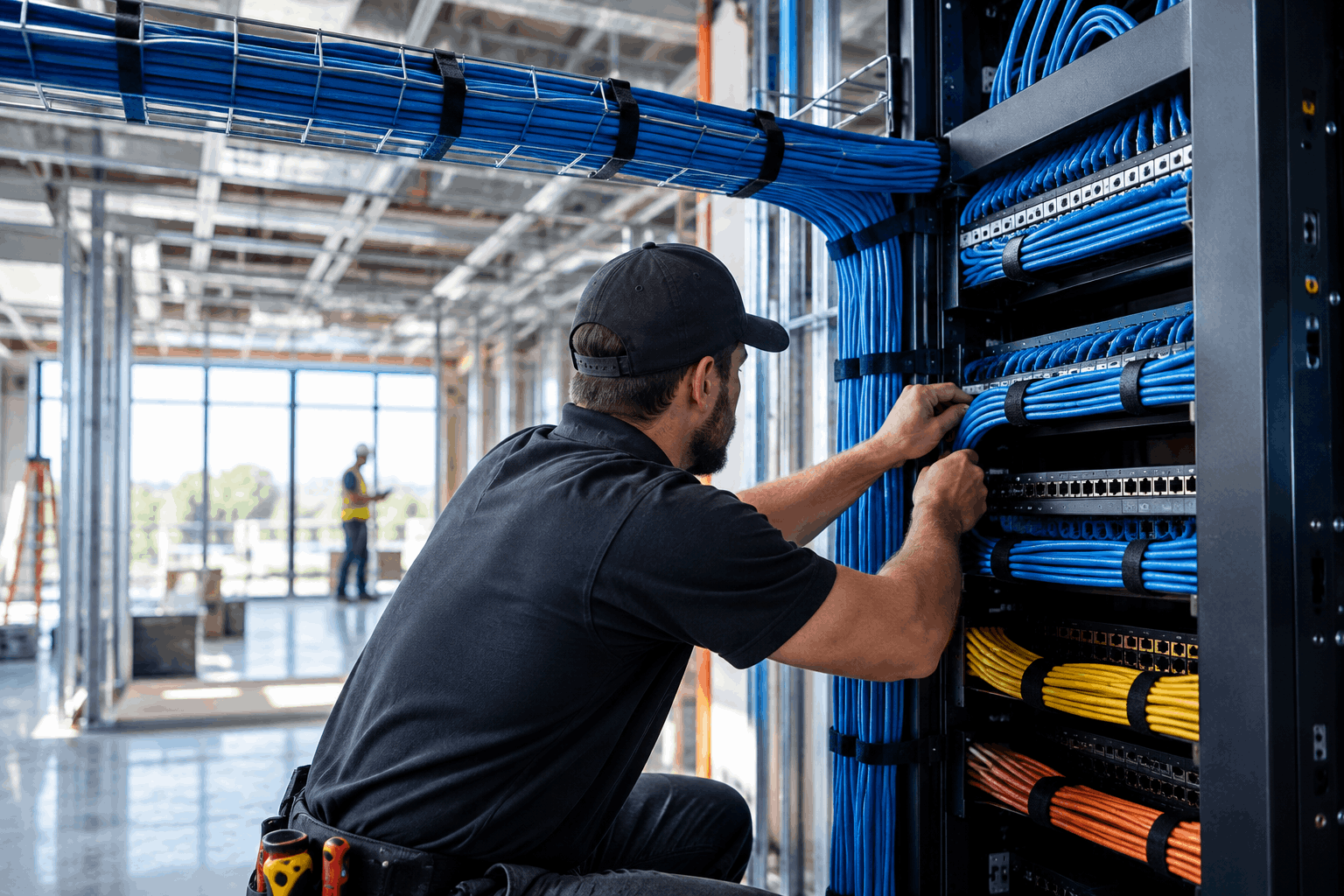
Organization: Rather than a chaotic, tangled mess of point-to-point wires, structured cabling uses a standardized, modular architecture organized neatly into patch panels and racks.
Reliability & Speed: It eliminates Wi-Fi dead zones and network bottlenecks, providing high-speed, secure, and uninterrupted data flow.
Selecting the right medium depends on your bandwidth requirements, physical layout, and distance constraints:
Cat6: The standard workhorse for modern offices. It supports gigabit speeds and can handle 10 Gbps speeds over shorter distances (up to 55 meters). Ideal for standard workstation data drops and IP phones.
Cat6a (Augmented): The gold standard for modern commercial environments. It supports full 10 Gbps performance over the full 100-meter channel and offers superior shielding against electromagnetic interference (EMI).
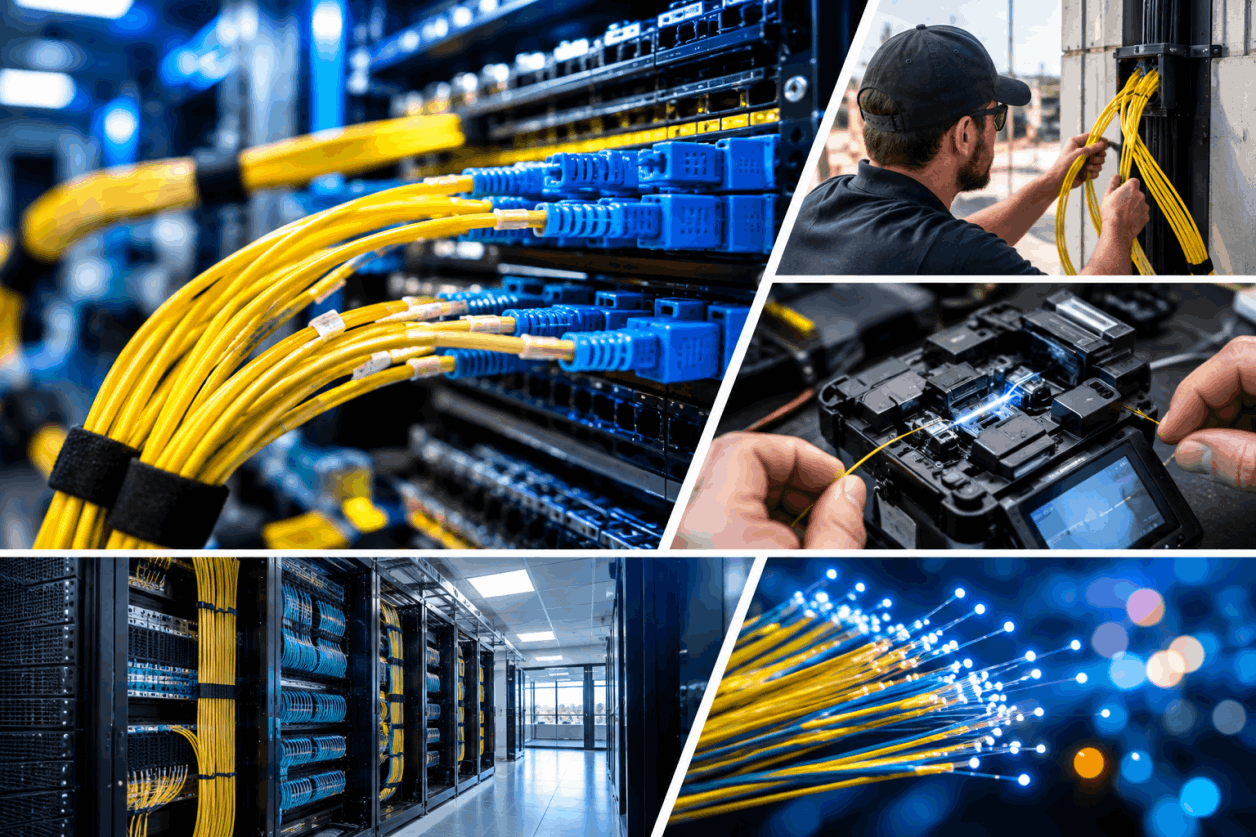
Fiber Optic (Single-Mode & Multi-Mode): Essential for high-speed data transmission over long distances (such as between separate buildings or multi-floor data closets) and is completely immune to electrical interference. Perfect for heavy-duty industrial or large-footprint facilities.
Yes. Professional low voltage contractors handle both scenarios:
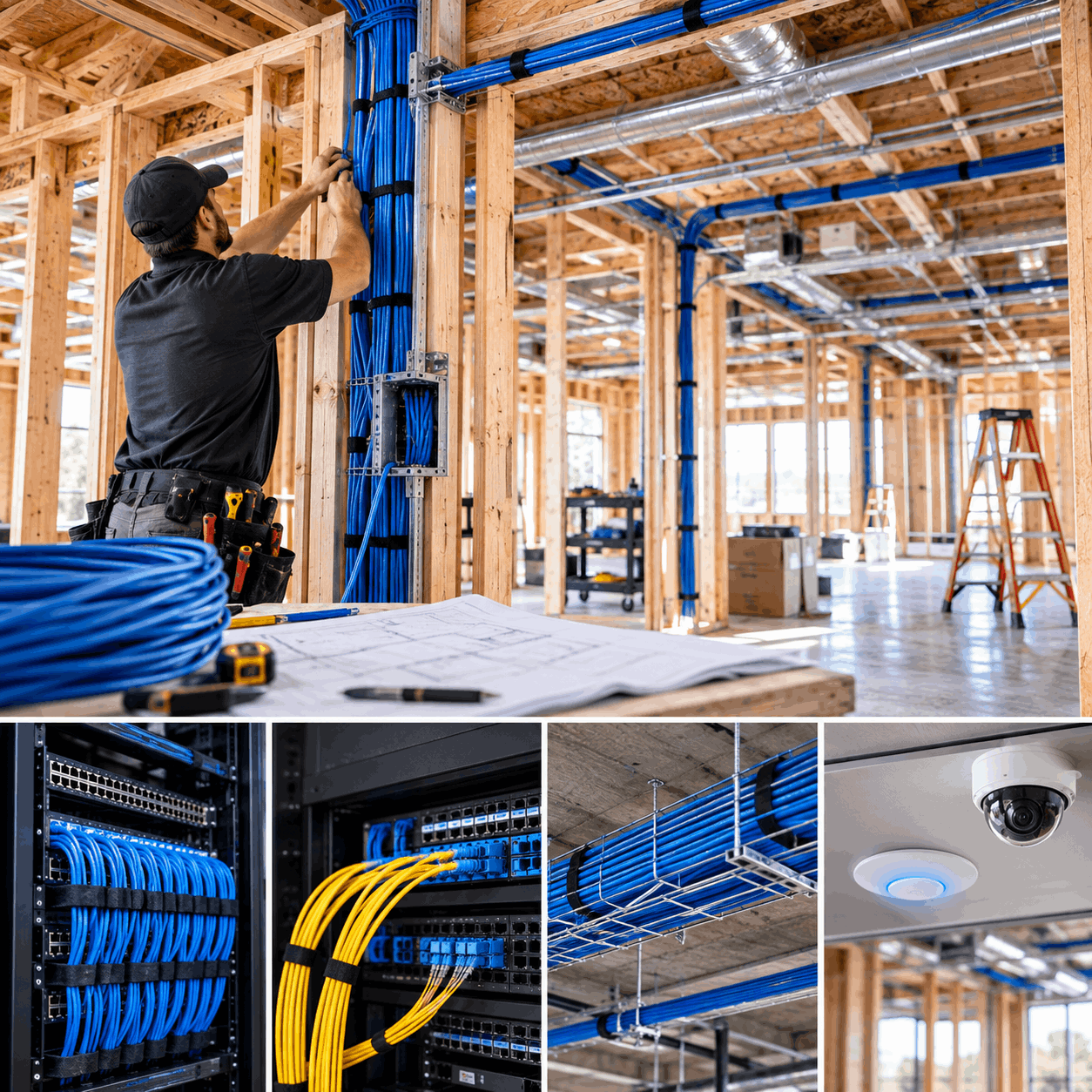
New Construction & Buildouts: Working alongside general contractors and electricians to pull cables through walls, ceilings, and conduits before drywall goes up, minimizing disruption and installation costs.
Existing Spaces & Retrofits: Upgrading, retrofitting, or cleaning up legacy cabling in active offices. Professional technicians can clean up "spaghetti mess" server rooms, trace abandoned wires, re-terminate endpoints, and install proper vertical and horizontal cable managers.
A reputable low voltage provider follows strict industry guidelines—such as BICSI standards, TIA/EIA performance criteria, and local National Electrical Code (NEC) fire safety ratings (like CL2/CL3 or plenum ratings). Key quality measures include:
Rigorous Testing & Certification: Every single cable run is tested and certified using specialized diagnostic tools to verify bandwidth capacity and signal integrity before project sign-off.
Comprehensive Labeling & Documentation: Both ends of every cable—as well as patch panels—are clearly labeled, accompanied by "as-built" documentation and rack layout diagrams to make future IT troubleshooting effortless.
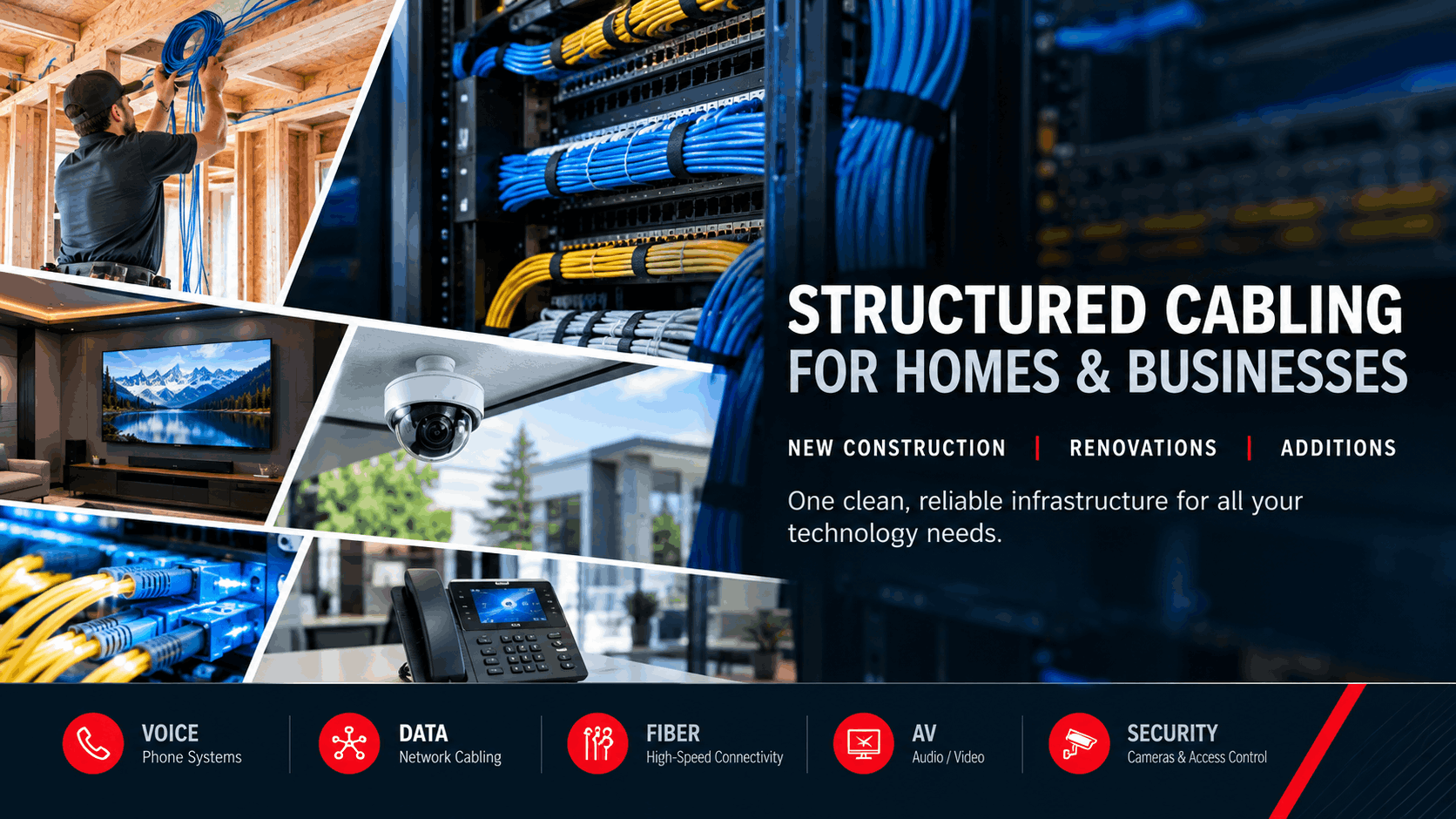
A properly designed structured cabling backbone supports far more than just computer networks. It unifies your entire technological ecosystem, including:
Enterprise Wi-Fi: Heat-map analysis and strategic placement of high-density Wireless Access Points (WAPs) for seamless roaming.
Physical Security: IP-based surveillance cameras (CCTV) and electronic access control systems (badge readers, intercoms, and biometric locks).
Audio/Visual (AV): Conference room display wiring, digital signage, intercoms, and multi-zone background audio.